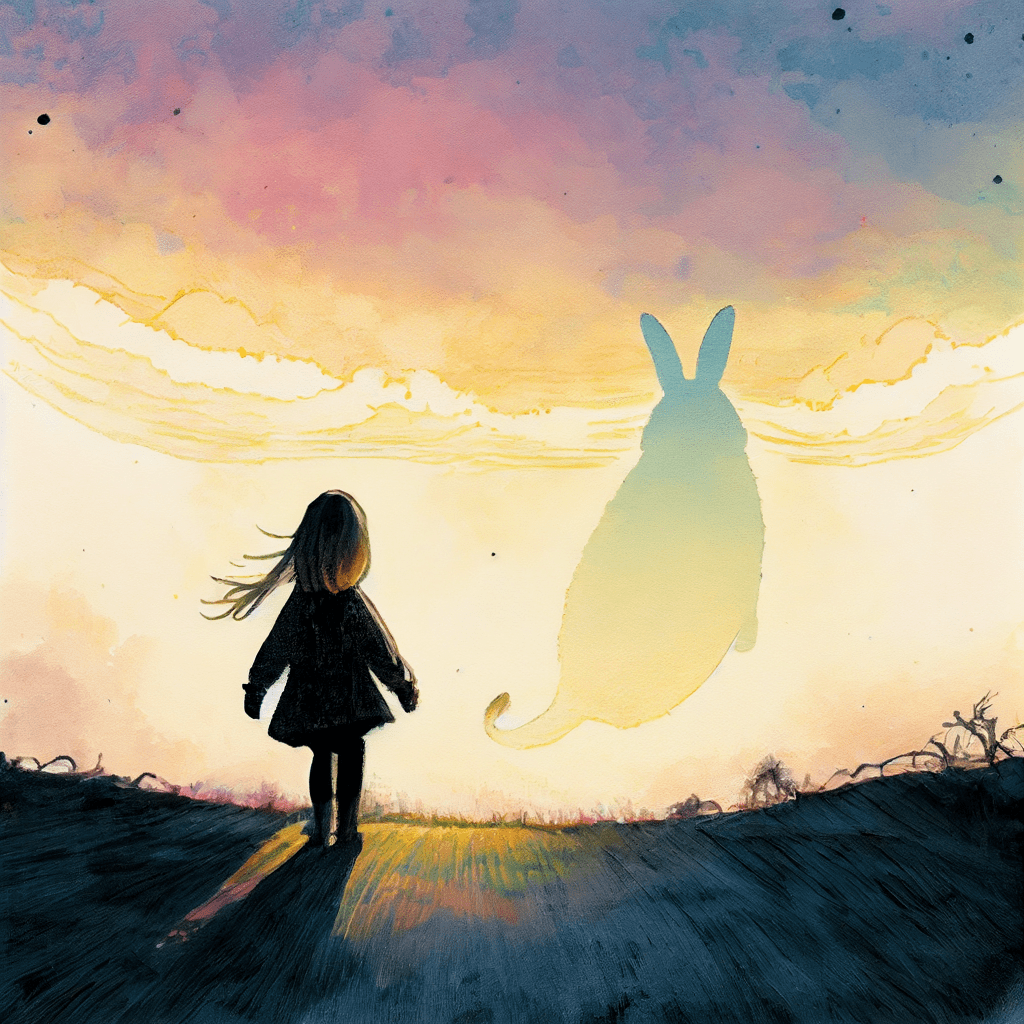
The first time I went to a Vipassana retreat, I didn’t follow any of the instructions. I’m a spiritual rebel, I come by it honestly. Instead of following instructions, I let myself daydream, did my own “meditations,” laughed in my sleep, soared in my dreams, and met an angel who is still my companion among the dragonflies.
If you haven’t heard of Vipassana, it is a meditation technique taught by S.N. Goenka, who helped bring this ancient practice to the modern world. Vipassana was first taught by the Buddha more than 2,500 years ago and preserved for centuries in Burma. Centers all over the world now offer intensive, residential retreats, usually ten days long, run entirely on donations.
A ten-day retreat requires complete silence, with no talking, eye contact, or writing. There is some serious vetting for participants, because this type of psychological deep dive isn’t for everyone. As the entire course is based on donation, so you can come for eleven days, live in a dorm, get fed vegetarian two meals a day, and learn this ancient technique.
In the span of my twenties, I would eventually attend about a dozen more Vipassana retreats and also served and managed roughly the same number of courses for others.
After completing one course, I felt certain it was not a cult.
When I returned, on my second retreat, I finally became open and receptive to the ancient methodology. I realized that if it worked for millions of people, perhaps I should give it a real try. It was a really earnest group of folks who just want to help people, and I finally felt ready to engage with the methodology seriously.
The method is the epitome of experiential learning. Take the first Buddhist precept- There is suffering- you didn’t need to intellectualize suffering because you were living through it, creating it for yourself through the thoughts you chose. You did not have to analyze attachment; it was visceral. If you didn’t care about something, it simply would not disturb you. Impermanence became a lived experience. Pain came and passed. Joy came and passed. Boredom too. It is hard to argue with Buddhism. There is just so much truth there.
The days begin at 4 a.m., with meditation nearly every hour and only a few breaks. Sitting for 12 to 13 hours a day is grueling, but it teaches you how to inhabit your own mind. Vipassana teaches the basics of Buddhism through an embodied practice that is simple to describe but incredibly difficult to master.
During the first few days, your only task is to watch the breath. Your only job is to notice the air entering and leaving your nostrils, its temperature, force, and rhythm. When the mind wanders, which it does relentlessly, you are simply supposed to notice it and bring attention back to the breath. Anyone who has tried a focusing meditation even briefly knows how busy the brain is, hopping constantly from one distraction to the next. It is truly humbling to do this simple practice, because it is human to get distracted and listen to stories in our mind. Catching yourself in story quickly and without judgment is the goal, not perfect focus.
After getting the hang of this focus, you move on to actual practice of Vipassana, which means seeing things as they really are, or simply, insight.
The practice of Vipassana meditation is a deliberate scanning the body from head to toe, noticing sensations in every and every inch of your body. You scan and witness the toes, the soles of the feet, the calves, the knees, climbing up and noticing every contour, and then back down again. For hours, you cultivate attention and equanimity toward whatever arises.
Inevitably, the brain becomes restless. Pain sets in, both physical and mental. Our brain starts to tell stories and rehash old wounds. It all passes eventually, but the stories we tell ourselves matter deeply.
It’s fascinating to watch your own mind at work. After a day or two of focused attention, you notice it returning again and again to certain ideas. Over time, it tests many possibilities, but in my experience, the thought forms that spark an emotional response take hold most firmly. It is as if your heart and your mind are conspiring, nudging you toward what matters most, what you most need to face.
In my retreats, I have experienced both the sublime and the terrifying.
These experiences were not random. They arose as my mind emptied and became still, allowing what I had long hidden from myself to surface. Grief, betrayal, and old terrors lived alongside moments of grace. I am convinced that as humans we must feel and experience every emotion if we are to understand the full scope of being human.
I remember being turned off by the word suffering when I was young. Why would anyone want to build their spirituality around that? It sounded depressing, like choosing sadness on purpose.
But once I gained some perspective on what it means to be human, I realized that suffering isn’t a punishment, it’s simply the truth. Every person, no matter how rich or poor, beautiful or broken, will feel it.
It’s just the truth.
Being on retreat often feels like stepping into a past life where I was a happy nun, sequestered away in a nunnery. All my needs were taken care of, and my only task was to be with spirit. I loved that feeling, and I still hear its call.
As a teen, I tried to fulfill this same need in a much less healthy way, seeking retreat from the world through my anorexia. Looking back, I can see that both were attempts to find space to be with myself and my inner life. One nurtured me, and the other nearly destroyed me.
The strong determination I once used to deny myself became the same determination I brought to meditation. During our hour-long sittings, we were asked not to move, to let the sensations come and go, no matter how painful. It was a far healthier way to meet my own intensity.
I learned to love myself and my brain in these retreats, and best of all, to laugh at my mind’s antics and to be gentle with myself. Our brains are like jails; we keep prisoners inside until we realize we are truly only hurting ourselves. In fact, prisoners who practiced Vipassana in jail described it as even more difficult than prison itself, which shows just how intense and transformative the practice can be.
I’m so grateful I found these protocols; These practices provide scaffolding for presence and embodiment and offer tools to remain steady and attentive when the mind feels unsettled. My time in Vipassana opened me to that. It taught me to fully inhabit my body, to breathe when reality felt uncertain, and to greet both angels and shadows with the same attention.
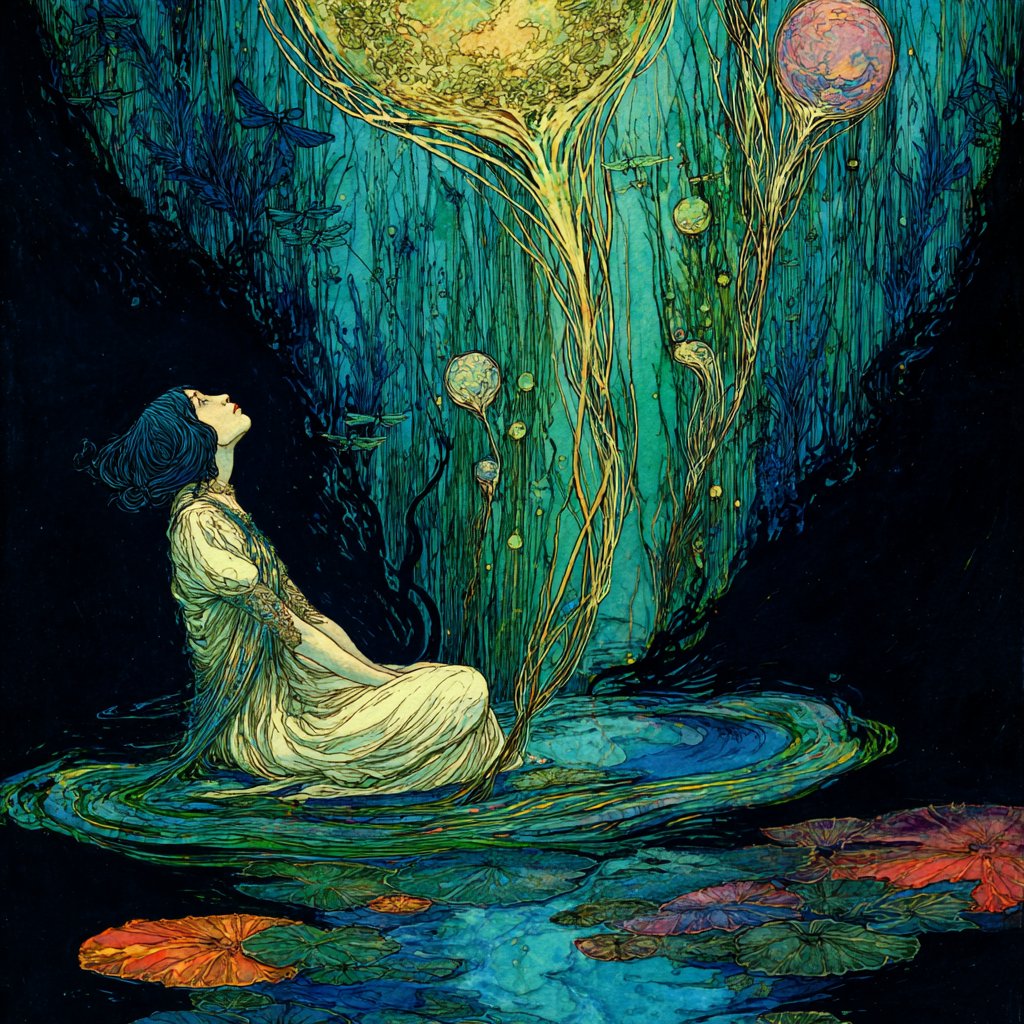
I remember the angel amongst the dragonflies who met me on my first retreat, offering a love so vast I can still feel it. I remember the dark presence that circled me in another retreat, bringing up primal fears I had buried long ago. Each encounter helped me practice being present in the body, steady in the mind, and aware of whatever arose without turning away.
Through these retreats, I learned that the mind, even in its chaos, holds the key to both suffering and extraordinary connection.
Meeting my own thoughts, fears, and joys with curiosity, patience, and love became the truest practice of all.
Vipassana showed me that presence itself, inhabiting my body, my mind, and my life fully, is the skill that allows us to navigate both the challenges and the wonders that appear. In that quiet awareness, I began to understand that presence isn’t about escaping pain or chasing peace. It’s the strength to stay through the tenderness, the terror, and everything in between.
In the final days of each retreat, we practice Metta, sending loving-kindness to all beings, seen and unseen.
“May all beings be happy. May all beings be safe. May all beings be free from suffering.”
Sitting with these words, I felt the capacity to hold both terror and love, the way it can touch what is gentle and what is unknown.
Love, extended without limit, revealed itself as both shield and bridge, a way to navigate fear and tenderness while connecting with the unseen.
Do you have any connections? I would love to hear them!